Product Marketing That Actually Works: A Micro-SaaS Founder's Guide
Product marketing is the bridge between your amazing micro-SaaS and customers who need it. This guide shows founders practical strategies to create customer-driven marketing that drives real growth.

product marketing acts as the critical link that brings your micro-SaaS to the customers who need it most. Instead of pushing sales and promotions, product marketing centers on getting to know your customers, aligning your product, and writing compelling copy that speaks to real-life challenges. For solo founders, knowing product marketing can be the difference between building something that people want and building something that people will buy.
Understanding product marketing for Micro-SaaS
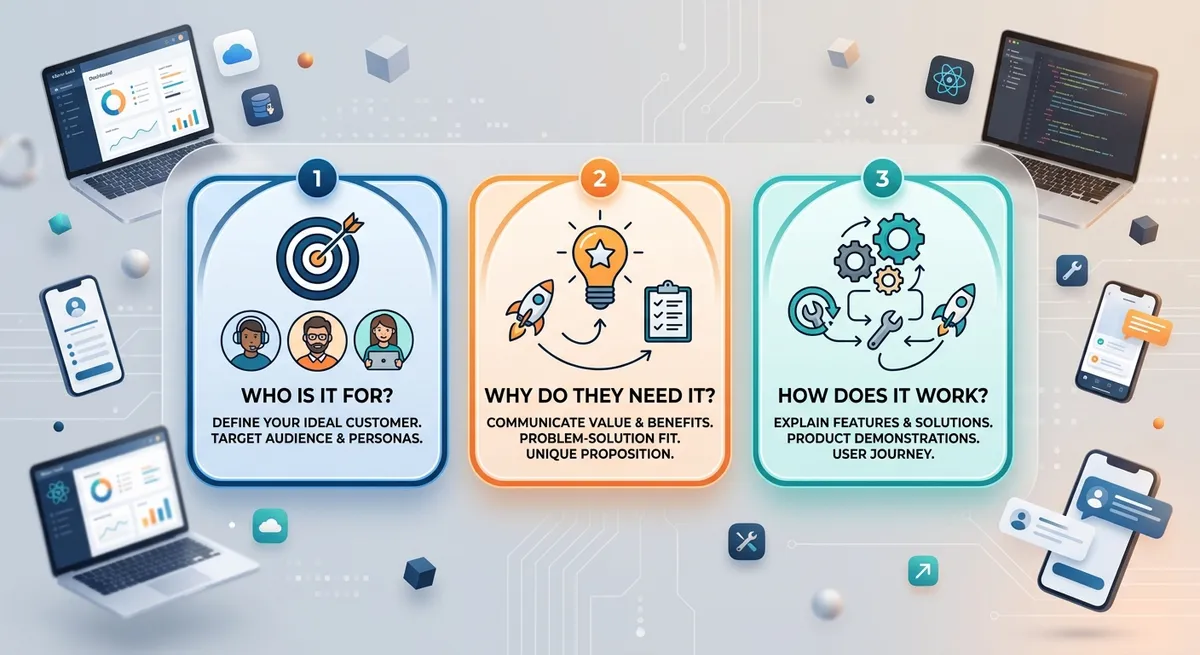
product marketing isn't merely SaaS jargon; it's a rigorous process to clarify your place in the market, your product's positioning, and all other marketing activities. Put simply, product marketing answers the following questions: Who is the buyer for your software solution? What is your unique selling point (USP)? What is your value proposition and what's in it for them? This is essential for micro-SaaS founders especially; you don't have the time or money to be wasting your marketing dollars and efforts!
Building Your Foundation: Know Your targeted customer
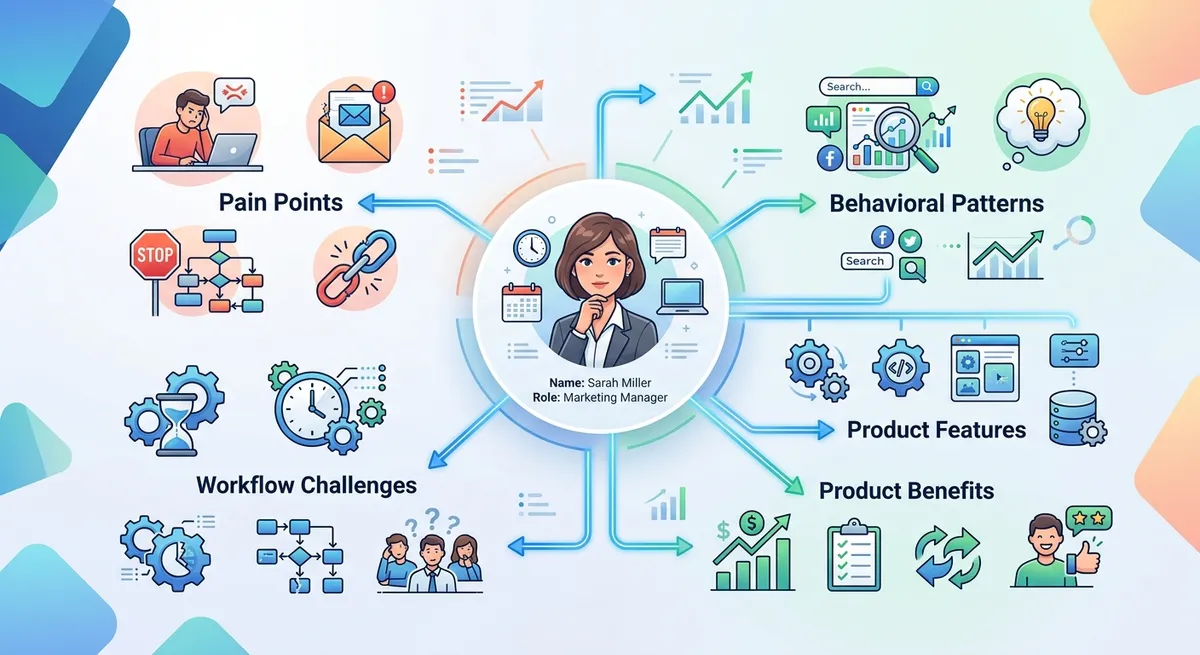
The most common error I see founders make is they're not picking a niche. Your targeted customer should not be "small businesses" or "freelancers"; your targeted customer should be the niche in those groups with a problem you want to help them with. So, who do you want to serve? You might already have some customers who are getting a ton of value out of your product. Even if you're still running beta tests, think about who is getting a ton of value from your product right now, and start to narrow it down. Maybe that's the industries, the roles, or the problems that the product solves in a particular way. Once you have a sense of your customers in mind, think about the customer personas you're thinking about. What does a customer look like in your space? It might sound something like: "Sarah is 35 and likes coffee," or "Sarah is an operations manager at a 50-person agency and spends three hours every week manually tracking project progress and is really frustrated that the threads of updates on Slack always get lost."
Crafting Your Value Proposition and Positioning
Your value proposition is not your slogan. It is a concise statement of the unique value your product offers your targeted customer. The most effective value propositions often employ a simple structure: For [target customers], who need [solution to their problem], the [product name] is a [product category] that [statement of primary benefit], unlike [alternative solution] that [secondary benefit, typically less desirable]. Positioning is about establishing a place in your potential customer's mind. Are you trying to be the "easy alternative to cumbersome enterprise solutions"? The "automation platform for non-developers"? The "cost-effective choice that doesn't compromise on functionality"? Position your product in a way that is both authentic to the value your product actually delivers, and differentiable from competitors. You don't want to try and position yourself as the "most efficient" if you cannot back this claim up. Find the unique strengths your product delivers, and then communicate this effectively.
Developing Your go to market Messaging Framework
Now that you know your customer and your positioning, you’ll need an omnichannel messaging framework. This framework should consist of your core value proposition, top benefits, supporting evidence, common objections, and rebuttals.
Your core messaging should be channel-neutral. Your product messaging needs to sound consistent on your site, on a call sheet, in cold emails, or on a referral from a friend. They’ll all talk about the same main topics.
Tailor your messaging according to your customer’s awareness level. Someone who’s never heard of your product category needs a different pitch than someone who’s currently comparing options. Early messaging focuses on problem awareness, whereas late messaging focuses on differentiation and validation.
Try out your messaging with actual customers. What sounds good in your mind may not resonate with your customers. You can run a survey, conduct user interviews, or just ask customers how they’ll describe your product to their peers.
Choosing Your Marketing Channels and Tactics
Now that you have built your foundation, you'll be in a good position to intelligently select which channels to use for reaching your targeted customer and how to engage them with your marketing message. You should choose these marketing channels based on the behaviors of your targeted customer. For example, where do your prospects hang out online or in real life, and what content are they engaging with when researching how to solve their business problems? In most cases, B2B micro-SaaS companies will get the most bang for their marketing buck with content marketing that offers value to a specific workflow that your product marketing solves. For example, if you have a project management app, write blog posts about productivity and how teams communicate better with project management apps. This blog post serves to educate your target customers while subtly educating your customer about why your company is a great resource for their needs. Another marketing strategy worth exploring for B2B micro-SaaS companies is outreach. Especially as a company gets off the ground, outbound sales outreach can be a good way to get your foot in the door with new customers, so long as your outreach is targeted and relevant, and you can show that you've done your homework on each specific prospect (and ideally, show that you've already done this work for others). Other B2B micro-SaaS marketing ideas worth exploring are partnership and integration opportunities with other software. If you're able to integrate with popular products already being used by your target audience, you can use those integrations as a channel to find new customers.
Measuring and Iterating Your product marketing
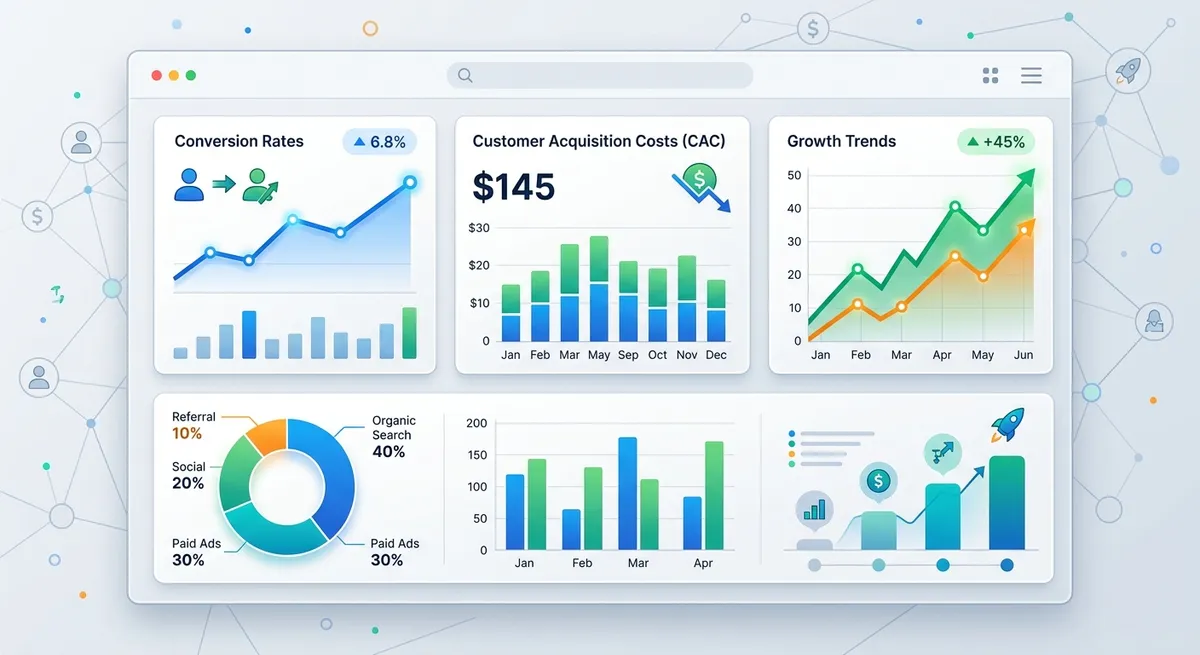
Don't measure success on vanity metrics, like total site traffic or followers on Instagram. Look instead for metrics that impact the bottom line. These include the volume of qualified leads coming from each channel, your conversion rates, customer acquisition costs, and customer lifetime value. Track the performance of different messaging and positioning variations. A/B-test your value proposition, headlines, and call to actions. But do it right by changing one thing at a time so you know what was responsible for the change. One of the best ways to iterate is listening to customers. Conduct customer interviews regularly to determine if your positioning resonates. If you get feedback from customers, look for language they're using to describe their problem and your solution. Don't forget to measure your message consistency. If you're contracting out customer acquisition or you have co-founders involved in the sales process, make sure you're all messaging the same core value propositions.
Building product marketing Into Your Workflow
Being a micro-SaaS founder, you’ll probably be wearing many hats. What we want to do is embed a certain type of product marketing into what you’re already doing. It’s not a separate discipline of thinking. When you’re thinking about product, think about customer research. Make sure your product ideas fit the broader strategy of your positioning and messaging, and validate that people really want them and that it’s the right positioning for these features. When you think about content creation and marketing, always begin from the perspective of your customer personas and value propositions. Otherwise, you’ll be chasing a marketing trend with nothing that connects back to your broader goals. Finally, always revisit your positioning. When you did your initial launch, things were probably different, so revisit this from time to time as you gain more customers and learn more about the marketplace.
Key Takeaways
• Positioning, communication and understanding the market are what bridge a product gap. Don't focus just on promotion. • Define your targeted customer with specific detail, as successful micro-SaaS marketing speaks to precise pain points, not broad demographics. The successful micro-SaaS product knows who and where their customers are. Define them as clearly as you can. • Create a value proposition and positioning that is strong and defensible, is consistent with the product's strength, and distinguishes between your offering and other products. • Create a messaging framework. The same message should resonate across all channels, and be adapted for each stage. • Pick your channels based on where your customers spend time, not what's trendy; content marketing and strategic outreach often work best for B2B micro-SaaS. • Measure success through business outcomes like qualified leads and conversion rates, not vanity metrics like traffic or followers. • Integrate marketing into your existing processes. Don't add an activity that you have to find time for.